Patchwork Quilt Design Classes
|
Dena, a highly skilled designer, provides patchwork quilt classes as she teaches her students how to create beautiful designs and guides them in bringing those designs to life. By learning Dena's unique and self-developed design methods, you can unlock the ability to create your own original works of patchwork quilt art.
|
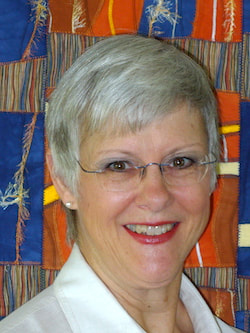
Dena teaches design; then she provides specialized methods to turn any design into a quilt.
For more information about classes, please contact Dena.
If you came here looking for online quilt classes,
see Dena's special message at the end of this page.
If you came here looking for online quilt classes,
see Dena's special message at the end of this page.
Special Message from Dena
|
Welcome to my website! I'm excited that you're interested in the patchwork quilt design classes I teach.
Click HERE for information about pricing. If you cannot wait until you can take one of my classes, why not buy an ebook, a more affordable and convenient option than a video course? My ebooks contain valuable insights and, in some cases, even more information than you would find in a class. They are filled with photos that illustrate both the logic and techniques involved. If you want the support of a live experience, reach out to me for coaching. I will assist you with any specific questions or challenges on Zoom, WhatsApp, FaceTime, or other video chat services of your choice. We can arrange a fair exchange of my time for your support. If you have questions, contact me now. I'm here to help you make the most of your learning experience! |
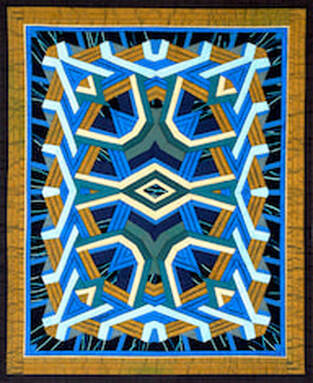
All That Glitters, a Crystal Quilt
|
Crystal QuiltsDo you recall the joy of creating folded paper dolls as a child? Now, you can learn how to make unique quilt designs that are simple and intricate, reflecting and tessellating in mesmerizing patterns. Whether you prefer designing by hand or using a computer, you can easily master an accessible drawing method. In this workshop, you will uncover the secrets to sewing seemingly complex designs by starting with the simplest seams. Additionally, you will gain expertise in various sewing techniques that may seem unusual but will be demystified during the workshop. Imagine the delight of impressing your loved ones with a patchwork quilt that is truly one-of-a-kind, crafted solely by you!
6-hour workshop; skill level: Intermediate
|
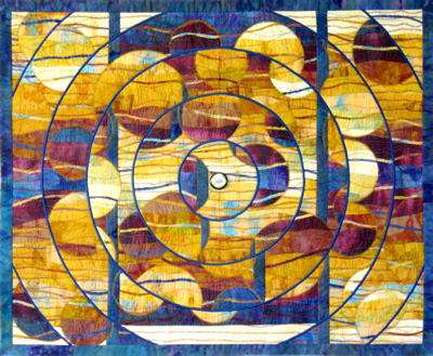
Bubbles III, a Darned Quilt
|
Darned QuiltsImagine creating a stunning gradated background using a thoughtfully selected collection of fabrics. Enhance it with an array of charming sewing techniques, and then playfully cut and rearrange it. Seam by seam, you'll skillfully mend it all back together, and behold! You'll have your very own Darned Quilt. Dena's design methods may shine through, but you can take pride in your own artistic design. This one-of-a-kind quilt requires no specific design skills, making it accessible to all. Get ready to showcase your creativity and enjoy the process of crafting a truly unique masterpiece!
6-hour workshop; skill level: Intermediate
|
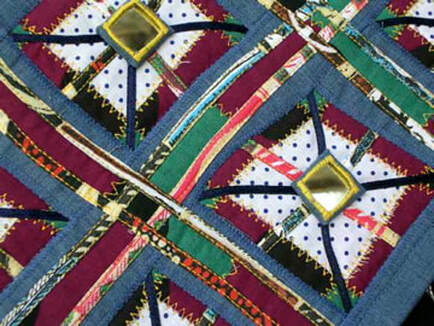
Conversation Piece (detail), a Structured Fabrics quilt
|
Structured Fabrics: Checks, Plaids & StripesExplore the realm of creativity by combining various materials in unexpected ways to craft Structured Fabrics featuring checks, plaids, and stripes. These unique textiles can then be used to construct original quilt designs beyond traditional bedding. The possibilities are endless, whether you're looking to adorn walls, tables, cushions, or other non-bedding items. Prepare to be pleasantly surprised as fabrics that may initially seem incompatible come together harmoniously. Embrace the amazing potential that awaits when you dare to think outside the box!
6-hour workshop; skill level: All
|
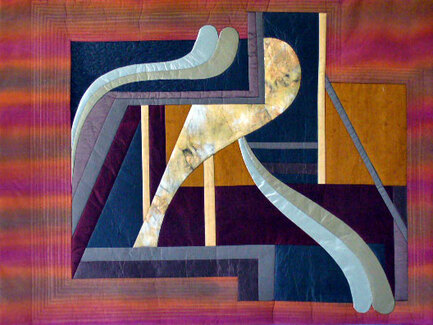
Glissando, a Goodbye to the Grid quilt
|
Goodbye to the GridEmbark on a transformative journey of self-expression through the art of quilting with our innovative method. Say farewell to the confines of the grid and unlock your creativity with Goodbye to the Grid. This class will guide you in creating original designs for patchwork art quilts, moving away from the traditional foundations of patchwork quilting while still honoring its rich heritage. By embracing this approach, you can open up a whole new world of possibilities in the realm of art quilting. If you're ready and eager to explore this exciting path, this class is the perfect starting point for your artistic adventure.
6-hour workshop; skill level: Intermediate
|
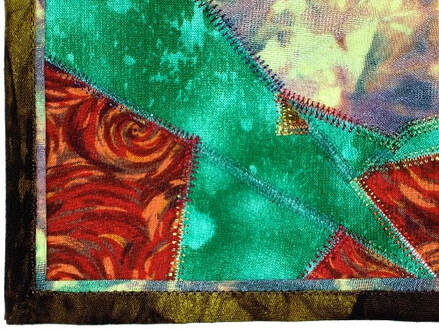
Autumn Revisited (detail), machine-bound patchwork quilt
|
Bind Quilts by MachineWould you like to make quilt bindings that have a professional finish and save you valuable time? Learn how to apply quilt bindings efficiently and with a polished look, all made entirely by machine. You'll become skilled in fuss-free techniques for single-fold, seamless, and double-fold quilt bindings. Take your quilt bindings to the next level by exploring the art of Perfect Piping, which can enhance both your bindings and patchwork. In addition, you'll have the opportunity to delve into mock bindings, bagging, facing quilts, and raw edge finishes, all covered in one comprehensive class. Get ready to elevate your skills and achieve stunning quilt finishes!
3- or 6-hour workshop; skill level: All
|
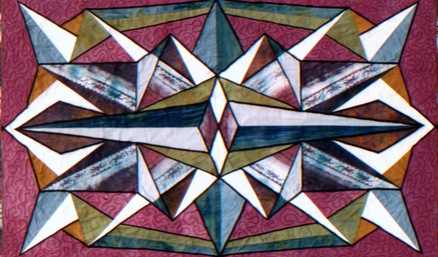
Revelation, a Reflections patchwork quilt design
|
ReflectionsAre you tired of relying on other people's patterns? Do you find yourself believing that everyone else is more talented than you? The truth is they have likely learned how to identify good designs. For every successful idea, there are often many rejected ones. If you feel creatively inclined but hindered by indecision, this patchwork quilt design class can help you break through those barriers and enter the realm of art quilting. By mastering the technique of mirror imaging, you'll unleash your artistic potential and create stunning quilt designs that are uniquely yours.
6-hour workshop; skill level: All
|
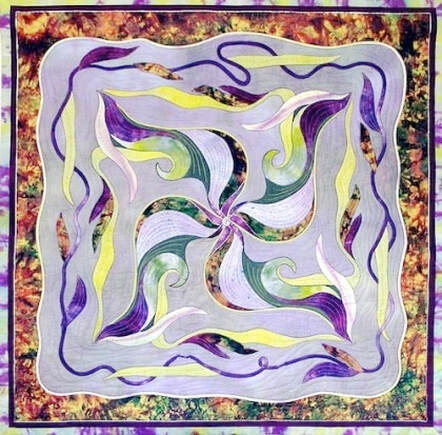
Lilac and Clover, a Designer Pinwheels patchwork quilt
|
Designer PinwheelsIn this workshop, you will discover the fascinating world of tessellated right triangles and their four-fold rotation, resulting in captivating Designer Pinwheels quilts. The process of designing and piecing intricate quilt patterns will be made simpler and more accessible through Dena's guidance. You will learn the art of piecing without unnecessary seams, allowing you to achieve beautiful results. Additionally, we will explore the purposeful and strategic use of embellishments to enhance your designs, teaching you when and how to incorporate them effectively. Throughout the workshop, you will master sewing techniques that will enable you to create your very own original Designer Pinwheels. Get ready to embark on a creative journey and unlock the potential of these mesmerizing quilt patterns!
6-hour workshop; skill level: Intermediate
|
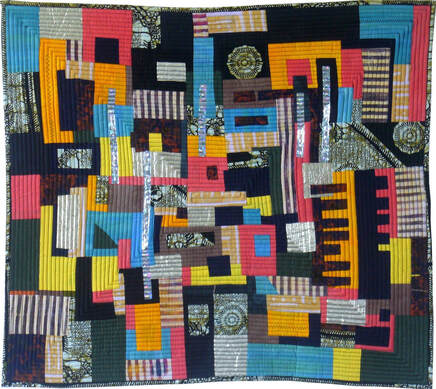
All That Jazz, a Patchwork Without Piecing African Quilt
|
African Quilts: Patchwork Without PiecingImmerse yourself in the vibrant world of African fabrics and techniques, and discover the art of crafting unique African quilts. In this class, you will uncover the secrets of manipulating fabric scraps to construct a quilt without the need for prior patchwork design or piecing experience. Prepare to embark on a journey filled with excitement and imagination, as this workshop will open new doors of creativity for you. After taking this class, you may never want to create quilts using any other method. This process is so easy that even beginners can create these wonderful African quilts!
3- or 6-hour workshop; skill level: All
|
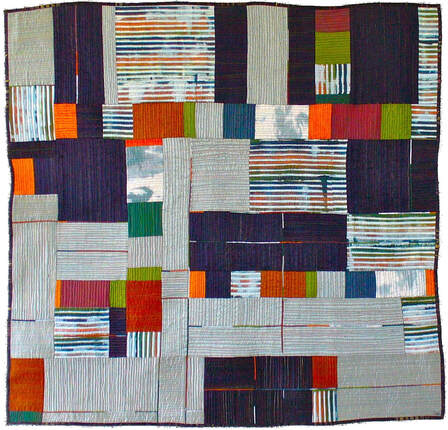
Gee Whiz, a Balancing Act silk quilt
|
Balancing ActRediscover the essence of patchwork quilting by creating abstract images using carefully chosen fabric scraps, particularly silks. Explore the art of arranging harmonious compositions, focusing on repetition, proportions, intricate details, and the distribution of colors and textures. Enhance your creations with exquisite freehand machine quilting. Each piece crafted through these techniques will be a unique art quilt that will undoubtedly become a captivating centerpiece on any wall.
6-hour workshop; skill level: Intermediate
|
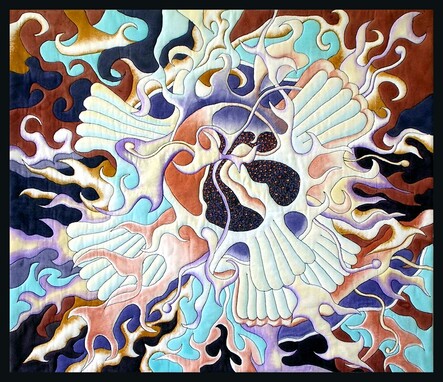
Heart's A'flutter, a Spirit Works quilt
|
Spirit WorksIn this unique and immersive workshop, we explore the depths of the quilter's imagination. Discover the art of surrendering control and letting your subconscious mind express itself freely through your fingertips. Join us in a workshop that combines free-motion stitching and hand painting to create Surrealistic images on quilts. While prior meditation experience is recommended, note that the outcomes are not predetermined and may vary.
6-hour workshop; skill level: Intermediate
|
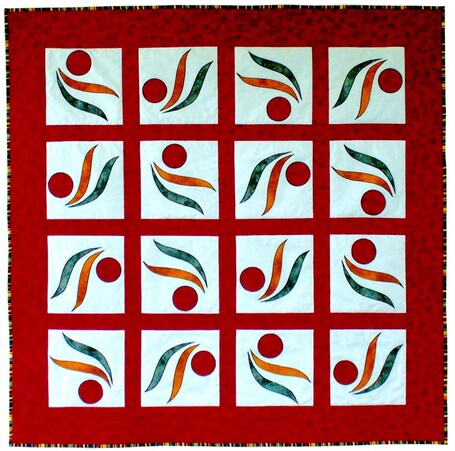
Whirlygig, a Sudoku Quilt
|
Sudoku QuiltsUsing a game to design a quilt? Whoever heard of such a thing?Nevertheless, it is possible to design quilts based on the popular game, Sudoku.
In this workshop, participants first learn how to work a Sudoku puzzle (if they don't already know), and then they substitute colors for numbers. As they work with the possibilities, they grasp the concepts of reflection, symmetry, and rotation, and their importance in quilt design. Participants then design a patchwork block, perhaps their first attempt at designing, and make a quilt from their design. 3- or 6-hour workshop; skill level: All
|